


SOLIDO
Efficient method to calculate 3D steady state heat transfer in objects of any shape
Features
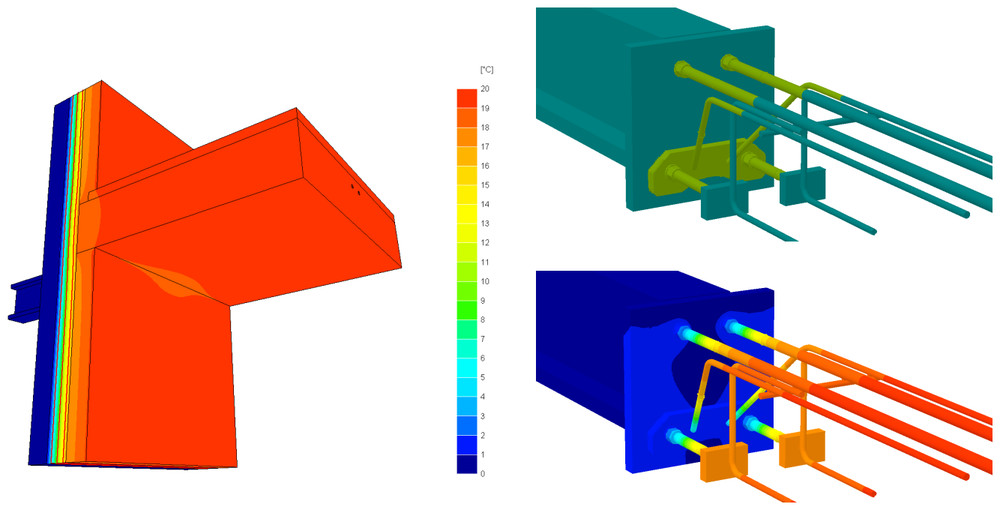
- Steady-state thermal simulation of all shapes in 3D
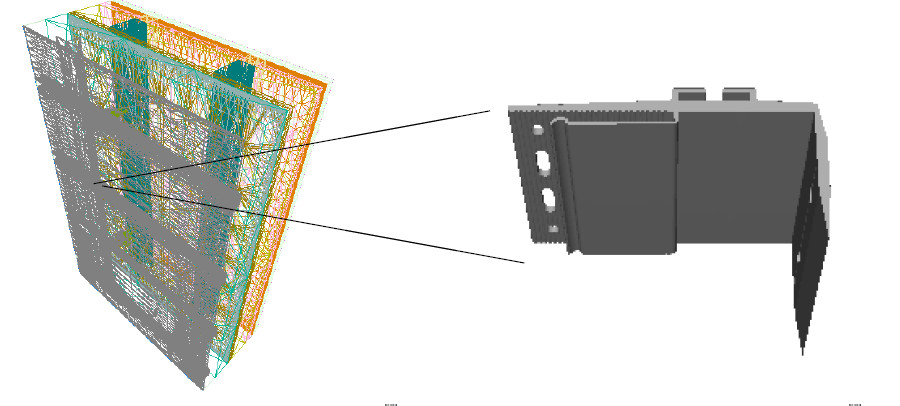
- Compatible with STL files
- Minimal simulation time due to powerful finite element solver
- Superior graphic representation of isotherms and isofluxes
- Software operational in English, French, German and Dutch
Application fields
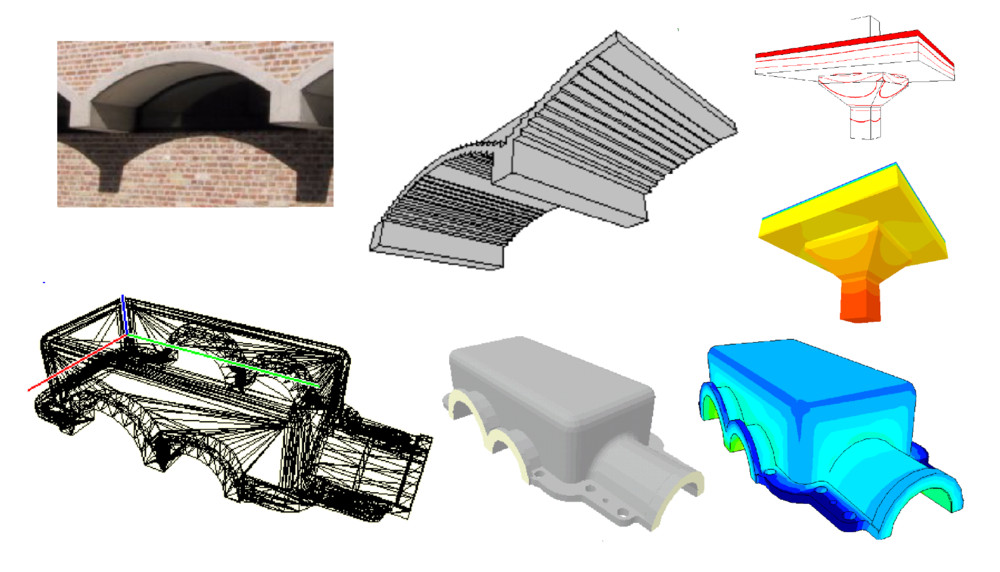
- Thermal bridge analysis: heat loss calculation, surface condensation (ISO/FDIS 10211)
- Thermal transmittances of building components and elements (EN ISO 6946)
- Thermal performance of windows, doors and shutters (EN ISO 10077-2)
- Heat transfer via the ground (ISO 13370)
- Heat transfer in masonry and masonry products (EN ISO 1745)
Input and geometric modelling
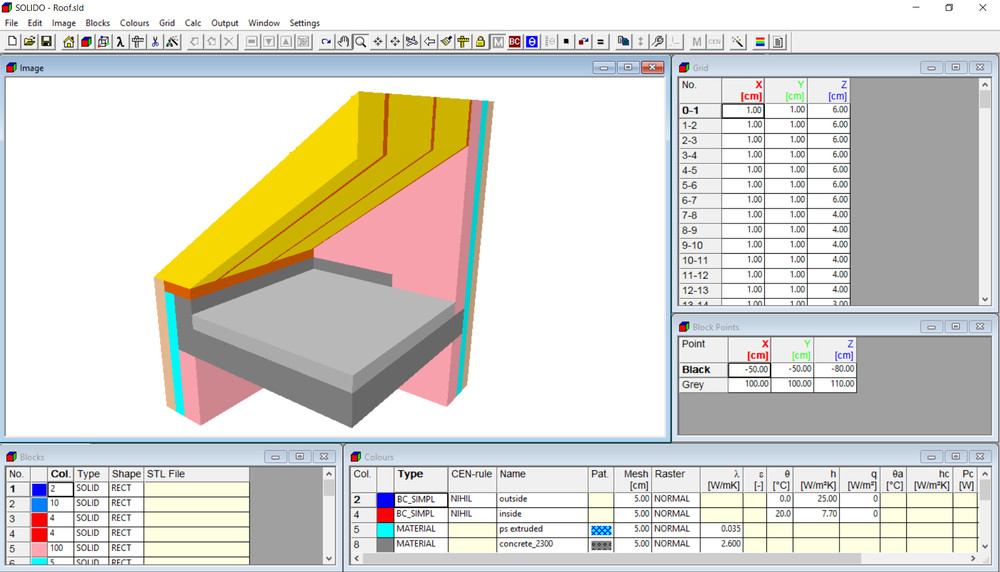
- Object modelled with blocks
- Free independent positions of the eight vertices of a block, allowing shapes as prism, pyramid, parallelepiped, etc.
- Corners around vertices can be rounded to form solids with quadratic surfaces: sphere, cylinder, cone, etc.
- SOLIDO blocks can also refer to STL files as exported from CAD systems (e.g. AutoCAD)
- The point coordinates of a STL file can be transformed in SOLIDO to adjust its position
Thermal properties and boundary conditions
- Thermal properties linked to colours of blocks
- Material properties with extensive material database
- Boundary conditions at material surfaces, material interfaces, inside materials (volumetric heat source)
- Improved simulation of separated radiation (using view factors) and convection (function of difference between local surface temperature and air temperature) by use of RADCON module
- Automatic calculation of thermal properties for air cavities in accordance with international standards
Mesh generation
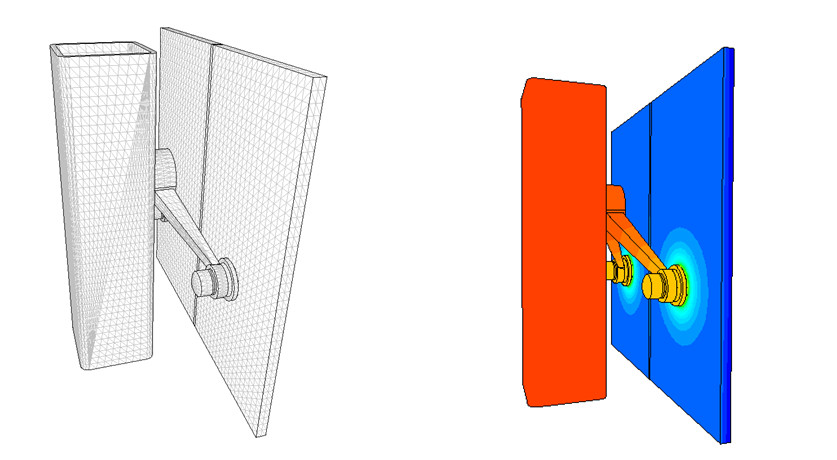
- SOLIDO uses a rectangular mesh with node fitting to the true object geometry
-
The user defines a 3D rectangular grid (comparable to grid in TRISCO). The grid can be equidistant based on a given resolution and then be optimised to minimise the number of nodes
- The object is rasterised in relation to the calculation grid to obtain a rectangular approximation
-
The node coordinates at the outside surfaces or in the interfaces between different colour regions are fitted unto the original object surfaces, to achieve a close match to the original geometry
Output
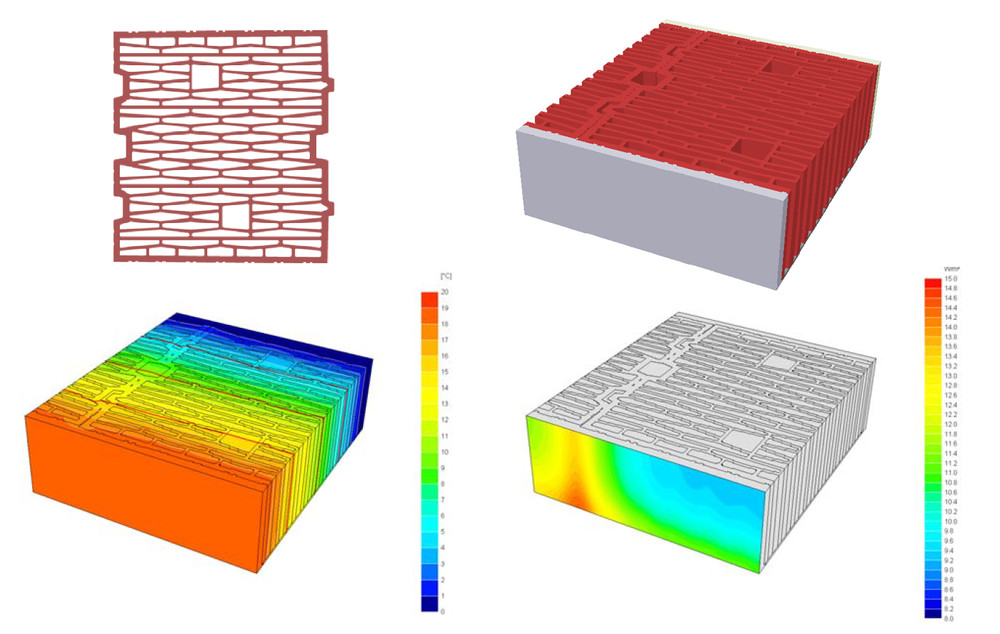
- Superior graphic representation of isotherms and isofluxes
- Text output of temperatures and heat flows
- Investigation of surface condensation
- Calculation of thermal transmittances and thermal bridge properties
Compatibility with other Physibel tools
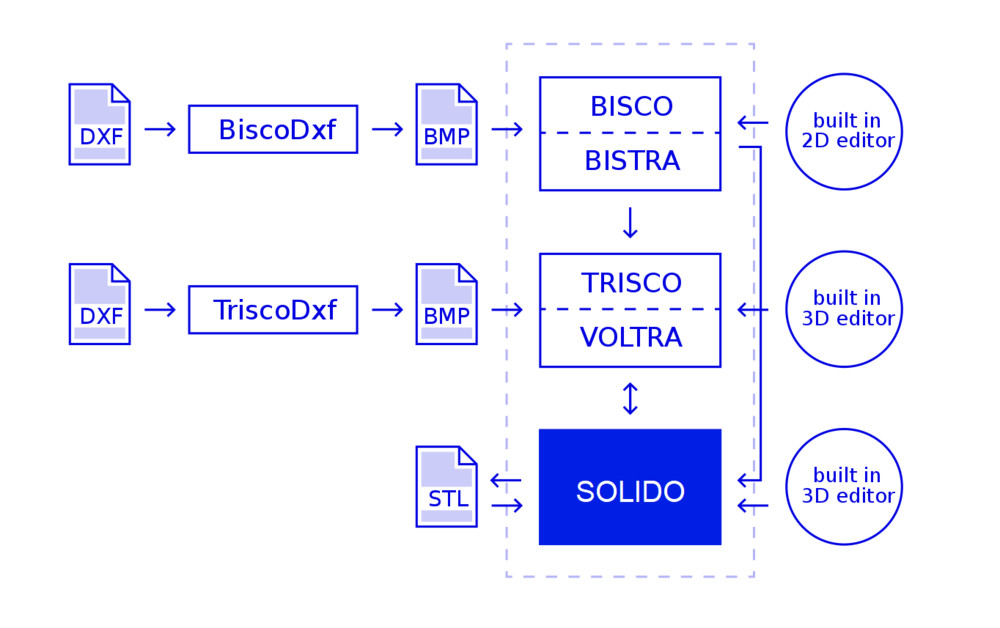
- SOLIDO can read TRISCO data
- SOLIDO can read BISCO data (creates STL files per colour for extruded profile, based on triangulation mesh)
Licence options
- SOLIDO is available with subscription licences (stand-alone or floating)
- A subscription licence gives you access to the latest version of SOLIDO, technical support and Physibel Knowledge Base.
- More information on the difference licence options can be found here
what's new in version 5?
- Improved STL file handling (import multiple at the same time, assign colour automatically, no need to save after every transformation).
- Drag Blocks (with mouse in Image window).
- Revised Colour window to allow conformity with different EN standards. Implementation of the equivalent thermal conductivities for air voids and layers according to EN ISO 6946.
- Click here for presentation with a complete overview of all new developments.